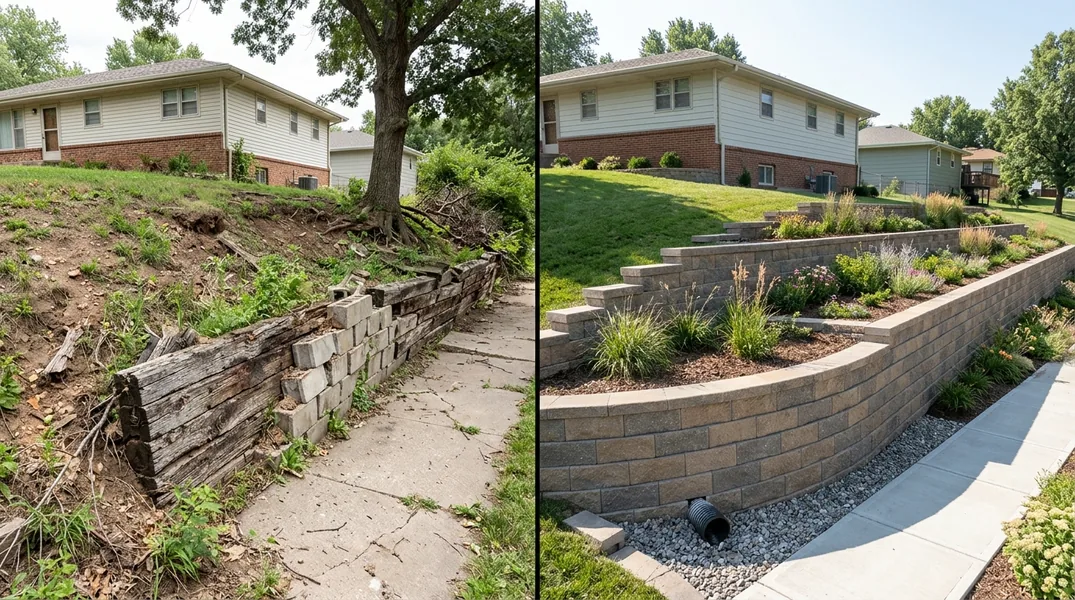
Why Storm Season Takes a Toll on Wichita Retaining Walls
Storm season in Kansas brings intense rain, rapid temperature swings, and saturated soil that can stress even well-built retaining walls. In Wichita, the combination of clay-heavy soil and heavy downpours creates hydrostatic pressure behind walls, pushing them beyond their design limits. Homeowners often notice small changes after a storm, but these early warning signs are easy to dismiss until the problem becomes costly.
Understanding how storms affect retaining walls helps you act before failure occurs. Waterlogged soil expands and increases pressure, while freeze-thaw cycles can crack concrete and shift blocks. If your wall was built years ago without modern drainage, it may be especially vulnerable. Recognizing the signs early gives you the best chance to schedule Retaining Wall Repair before a small issue turns into a full collapse.
Warning Sign 1: A Leaning Retaining Wall
A wall that leans outward is one of the most obvious signs of retaining wall failure. This often happens when soil pressure exceeds what the wall was designed to handle, or when the foundation has settled unevenly after heavy rain. Even a slight lean is a red flag because it indicates the wall is no longer stable and could continue to move. In Derby and surrounding areas, we see leaning walls frequently after prolonged wet periods.
Ignoring a leaning wall can lead to sudden collapse, which may damage landscaping, driveways, or nearby structures. If you notice a lean, avoid adding more weight or soil behind the wall and contact a professional for an inspection. Early intervention often means a targeted repair rather than a full Retaining Wall Replacement.
Warning Sign 2: Bowing or Bulging in the Wall
Bowing or bulging is another classic sign of retaining wall distress. Unlike a uniform lean, a bulge typically appears in the middle of the wall where pressure is greatest. This is often caused by water buildup behind the wall that cannot drain properly. When drainage is inadequate, saturated soil pushes against the wall, causing it to bow outward. A bowing retaining wall fix usually involves improving drainage and reinforcing the wall structure.
Homeowners in Andover should inspect their walls after every major storm for new bulges. If the bulge is significant or accompanied by cracking, it is best to have a professional evaluate the wall promptly. Attempting to push the wall back into place without addressing the underlying cause can make the problem worse.
Warning Sign 3: Cracks and Separation
Cracks in the wall surface or separation between blocks are clear indicators that the wall is under stress. Hairline cracks may seem minor, but they allow water to enter, which can worsen during freeze-thaw cycles. In Haysville, we often find that cracks widen after winter as water expands inside them. Separation between wall sections or between the wall and its footing is even more serious and suggests structural movement.
If you see cracks wider than a quarter inch or notice blocks pulling apart, it is time to call a professional. Concrete Retaining Walls can develop cracks that compromise their strength, while block walls may show shifting. A thorough inspection will determine whether repair or replacement is the best path forward.
Warning Sign 4: Drainage Problems and Water Pooling
Poor drainage is a leading cause of retaining wall failure. After a storm, check for water pooling behind the wall or soil that stays saturated for days. If your wall has weep holes, ensure they are not clogged with debris. In many older walls, drainage systems are inadequate or missing entirely, which puts immense pressure on the structure. A bowing retaining wall fix often starts with correcting drainage to relieve pressure.
If you notice water pooling or see evidence of soil erosion around the wall, it is wise to consult a professional. Proper drainage includes gravel backfill, perforated pipe, and filter fabric, which work together to direct water away from the wall. Upgrading drainage can extend the life of your wall and prevent costly repairs.
Warning Sign 5: Settling or Sinking Soil
Soil settling behind or in front of the wall can indicate that the foundation is unstable. You might notice depressions in the ground near the wall or gaps between the wall and the soil. This often happens when fine particles wash away after heavy rain, leaving voids that can lead to wall movement. In Wichita, clay soils can shrink and swell, exacerbating settling issues.
If you see sinkholes or significant settling, do not ignore it. These voids can cause the wall to lose support and eventually fail. A professional can assess the extent of the problem and recommend solutions such as regrading, backfill replacement, or underpinning.
Warning Sign 6: Tilting Trees or Fences
Sometimes the first sign of a failing retaining wall is not the wall itself but the things around it. Trees, fences, or utility poles that suddenly tilt or lean can indicate that the soil behind the wall is moving. This is especially common on sloped properties where the wall holds back a significant amount of earth. If you notice these changes after a storm, inspect the wall for other signs of distress.
Addressing the issue early can prevent damage to these structures and reduce the risk of injury. A professional evaluation can determine if the wall is the cause and what steps are needed to stabilize the area.
Warning Sign 7: Visible Movement or Collapse
Obvious movement, such as sections of the wall shifting out of alignment or partial collapse, requires immediate attention. This is a clear sign that the wall has failed or is about to fail. Safety should be your top priority: keep people and pets away from the area and call a professional right away. In emergency situations, temporary shoring may be necessary to prevent further collapse.
If you are facing a wall failure, do not attempt to fix it yourself. Retaining walls are complex structures that require proper engineering and installation. Contact free estimate for a prompt assessment and to discuss your options for repair or replacement.
When to Call a Professional for Retaining Wall Installation Near Me
If you have noticed any of these warning signs, it is time to consult a professional. A qualified contractor can assess the wall, identify the cause of the problem, and recommend the best course of action. Whether you need a simple repair or a full replacement, acting quickly can save you money and prevent further damage. For homeowners in Wichita and nearby communities, Wichita Retaining Wall offers expert inspections and Retaining Wall Installation services.
When searching for retaining wall installation near me, choose a company with local experience and a proven track record. Wichita Retaining Wall has helped many homeowners stabilize their properties after storm season. Call (316) 243-1027 to schedule your consultation and protect your investment.
Looking for a professional retaining wall contractor in Wichita? Wichita Retaining Wall responds fast for all your retaining wall needs.
Get a Free QuoteOur services: Retaining Wall Installation · Retaining Wall Repair · Retaining Wall Replacement