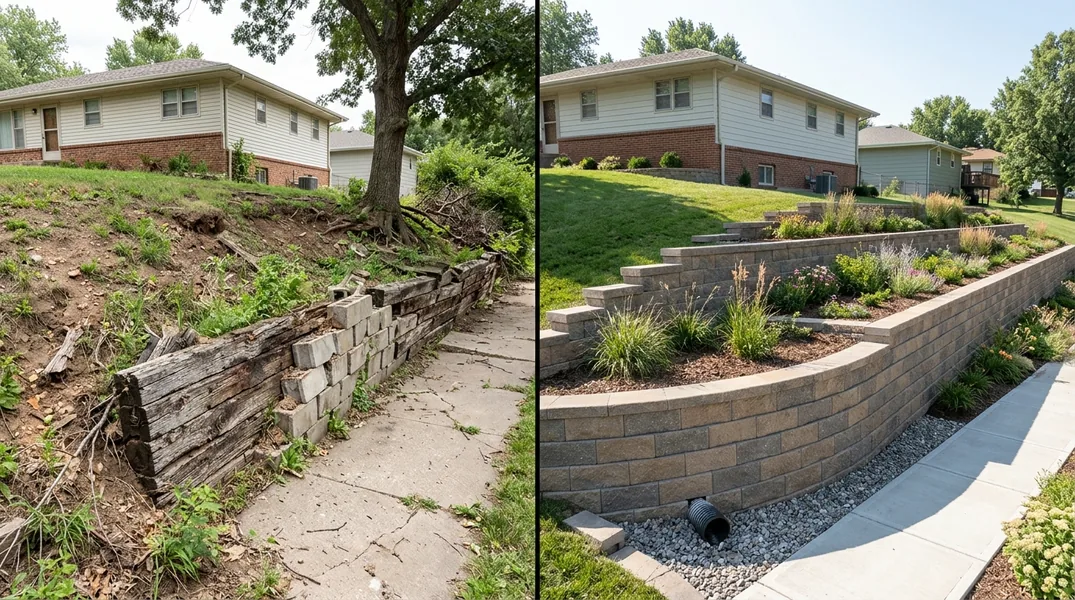
Why Wichita's Spring Rains Are Tough on Retaining Walls
Spring in Wichita brings welcome green lawns and blooming trees, but it also brings intense, soaking rainstorms that can dump inches of water in a matter of hours. For homeowners with a retaining wall, that seasonal moisture is a double-edged sword. While the garden loves it, the wall behind it may be quietly absorbing pressure it was never designed to handle. When water cannot escape, it builds up in the soil behind the wall, creating a force known as hydrostatic pressure. Over time, that pressure can crack, lean, or even collapse a wall that looked perfectly solid just a season earlier.
Many retaining walls in the area were built decades ago, before modern drainage standards were common. Even newer walls can fail if the builder skipped a proper Retaining Wall Installation drainage system. The result is a slow-motion problem that often goes unnoticed until the first big storm of the year exposes it. Understanding how water interacts with your wall is the first step toward protecting your investment and your property.
Hydrostatic Pressure: The Silent Wall Killer
Hydrostatic pressure is simply the weight of water pushing against a surface. When soil behind a retaining wall becomes saturated, the water fills the voids between soil particles and pushes outward in every direction. Because the wall is the only thing holding that soil back, it takes the brunt of the force. A single cubic foot of saturated soil can weigh significantly more than dry soil, and when you multiply that across the length and height of a wall, the numbers become staggering. This is why a wall that seemed fine in dry weather can suddenly bulge or crack after a week of spring rain.
The danger is compounded because hydrostatic pressure does not announce itself. There is no warning light, no strange noise, just a gradual buildup that stresses every joint, block, and footing. Homeowners in Derby and Andover often notice the first signs as hairline cracks or a slight lean, but by then the pressure has been working for months. A proper Retaining Wall Repair plan must address the water source, not just the visible damage, or the problem will return with the next storm.
The Role of a Retaining Wall French Drain
The most effective defense against hydrostatic pressure is a retaining wall french drain, a system designed to collect and redirect groundwater away from the wall. A typical french drain consists of a perforated pipe laid in a gravel trench behind the base of the wall, wrapped in filter fabric to keep soil out. As water seeps through the soil, it enters the pipe and flows to a safe discharge point, such as a storm drain or a downhill area of the yard. This simple but critical component relieves pressure before it can build up, protecting the structural integrity of the wall.
Unfortunately, many failed walls in Haysville and across the metro have no french drain at all, or have one that was installed incorrectly. Common mistakes include using the wrong pipe, skipping the filter fabric, or failing to slope the pipe toward the discharge point. Some builders even backfill with clay-heavy soil that traps water instead of allowing it to flow. If your wall is showing signs of water damage, a professional assessment can determine whether a new drainage system or a full Retaining Wall Replacement is the right path forward.
Warning Signs Your Wall's Drainage Is Failing
Not every drainage problem is obvious, but there are reliable warning signs that homeowners can watch for after a heavy rain. Water pooling at the base of the wall, soil that stays soggy for days, or a visible sheen of water seeping through the face of the wall are all red flags. You may also notice efflorescence, a white powdery deposit on concrete or masonry that indicates water is moving through the material. Cracks that widen over time, a wall that leans away from the soil it holds, or blocks that have shifted out of alignment are serious symptoms that should not be ignored.
In some cases, the ground behind the wall may settle or sink, creating a dip that collects water like a bathtub. This is especially common with older walls that were backfilled without proper compaction. If you see any of these signs, it is worth scheduling a free estimate to have the wall evaluated. Catching drainage issues early can mean the difference between a minor repair and a complete rebuild, and it can save you thousands of dollars in the long run.
Retaining Wall Installation Near Me: Getting Drainage Right the First Time
If you are planning a new wall, the best way to avoid drainage failures is to work with a contractor who understands local soil and weather patterns. In Wichita, the combination of expansive clay soils and heavy spring rains makes drainage design especially important. A properly built wall will include a gravel backfill, filter fabric, a perforated drain pipe, and a clear discharge plan. It will also be engineered to handle the specific loads and water volumes of your site, not just built from a generic plan.
When searching for retaining wall installation near me, look for a company that talks openly about drainage and can explain exactly how water will be managed behind your wall. Ask whether they use Concrete Retaining Walls or block systems and how each handles water. A reputable installer will welcome these questions because they know that a dry wall is a durable wall. If you are unsure whether your existing wall is at risk, call Wichita Retaining Wall at (316) 243-1027 to schedule an inspection before the next storm season arrives.
Protecting Your Wall Before the Next Storm
Spring storm season in Kansas is unpredictable, but the damage water does to retaining walls is entirely preventable with the right drainage strategy. Homeowners who act before the first major rain can avoid the costly cycle of repair and replacement that plagues so many properties. Simple steps like clearing debris from drainage outlets, checking for soil settlement, and scheduling a professional evaluation can make a significant difference. If your wall is older or shows any of the warning signs discussed above, a proactive inspection is the smartest investment you can make.
At Wichita Retaining Wall, we specialize in diagnosing and correcting drainage problems for homeowners throughout the area. Whether you need a new french drain, a targeted repair, or a full replacement, our team can help you understand your options and pricing before any work begins. Do not wait for the next storm to test your wall's limits. Reach out today for a free estimate and give your retaining wall the protection it deserves.
Looking for a professional retaining wall contractor in Wichita? Wichita Retaining Wall responds fast for all your retaining wall needs.
Get a Free QuoteOur services: Retaining Wall Installation · Retaining Wall Repair · Retaining Wall Replacement