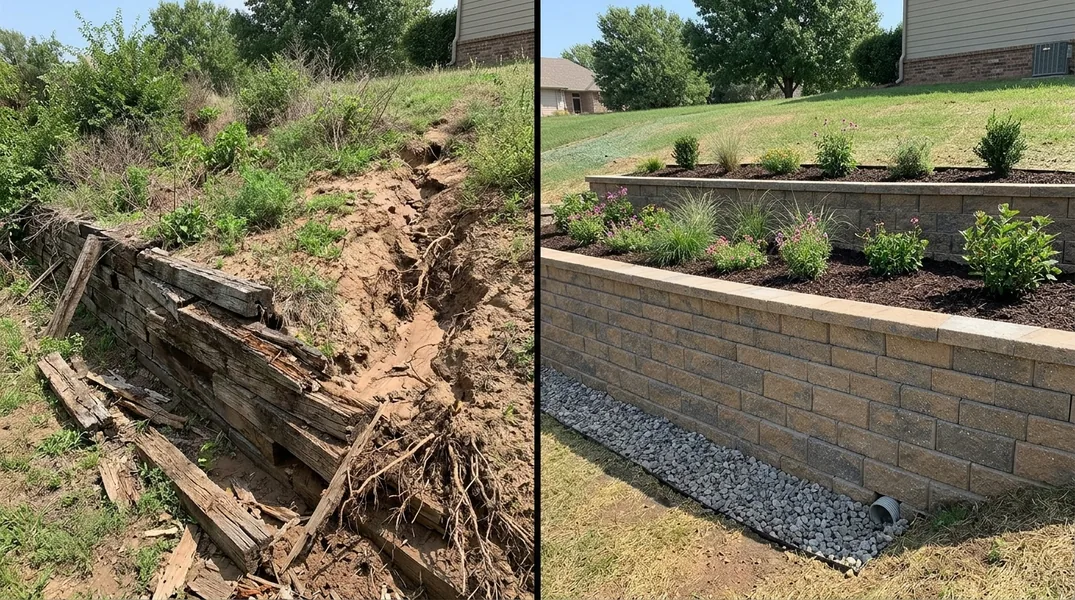
Why Retaining Walls Lean in Wichita
A leaning retaining wall is one of the most common calls we get from homeowners across the Wichita area. The cause is almost always the same: water. Our region's expansive clay soils swell when wet and shrink when dry, and that constant movement puts enormous pressure on a wall that was never designed to handle it. Add in freeze-thaw cycles during Kansas winters, and even a well-built wall can start to shift over time.
Other culprits include poor drainage behind the wall, missing weep holes, tree roots pushing from below, and footer failure. Sometimes the problem is simply age. A timber wall that has served a home for 25 years may be at the end of its useful life, while a concrete wall showing the same lean may have decades left if the issue is corrected early. The key is diagnosing the actual cause before deciding whether to repair or replace.
Signs You Need Leaning Retaining Wall Repair
Not every lean means the wall is doomed. If the movement is minor (a few degrees of tilt), the wall is still structurally sound, and the problem traces back to drainage or soil pressure, Retaining Wall Repair is often the most cost-effective path. Repair typically involves relieving the pressure, improving drainage with proper backfill and weep holes, and then either anchoring the wall or rebuilding the affected section.
Watch for these repairable warning signs: hairline cracks that haven't widened, slight tilting that hasn't progressed over a season, water pooling at the base after rain, or a wall that still feels solid when you press against it. If you catch these issues early, a targeted fix can add years to the wall's life at a fraction of replacement cost. A professional inspection is the only reliable way to know for sure.
When Retaining Wall Replacement Is the Better Choice
Some walls are past the point of saving. If the wall has leaned more than a few inches, shows large diagonal cracks, has sections that have pulled apart, or if the footer has failed, Retaining Wall Replacement is usually the safer and more economical long-term decision. Patching a structurally compromised wall often means throwing money at a problem that will return within a year or two.
Replacement also makes sense when the existing wall was poorly built to begin with, for example a wall without proper drainage or a footer that was too shallow for our clay soils. In those cases, a new wall designed for local conditions will outperform any repair. Many homeowners in Derby and Andover choose to upgrade to Concrete Retaining Walls during replacement because they handle soil pressure and moisture far better than timber or segmental block.
Retaining Wall Crack Repair: What Homeowners Should Know
Cracks are the most visible symptom of a struggling wall, but not all cracks are equal. Hairline cracks in the mortar or surface are often cosmetic and can be sealed. Wider cracks that run diagonally, or cracks that grow over time, signal movement in the structure itself. In those cases, Retaining Wall Repair may involve crack injection, re-pointing, or reinforcing the wall from behind.
The mistake many homeowners make is caulking a crack and calling it done. That hides the symptom without addressing the cause, which is usually water pressure or soil movement. A proper crack repair starts with an assessment of drainage and structural stability. If you're seeing cracks in Haysville or anywhere in the metro, it's worth having a professional look before the next rainy season makes things worse.
Repair or Replace Near Me: How to Decide
When you search for retaining wall help near me, you'll find plenty of opinions. The honest answer is that the decision comes down to three factors: the extent of the movement, the condition of the foundation, and the wall's age and material. A wall that has moved less than two inches and still has a solid base is a strong repair candidate. A wall that has shifted several inches, has a failing footer, or is showing multiple large cracks is usually a replacement candidate.
Cost also matters. A repair might run a few hundred to a couple thousand dollars depending on scope, while a full replacement is a larger investment. But a repair that only lasts two years before you replace anyway is money wasted. A reputable contractor will give you a straight answer and explain the reasoning, not just push the bigger job. For a clear assessment of your wall, call Wichita Retaining Wall at (316) 243-1027 or request a free estimate.
What Repair or Replacement Costs in Wichita
Homeowners often ask about pricing before anything else, and that's fair. Repair costs vary widely based on the cause and the wall material. Minor drainage fixes and crack sealing are on the lower end, while anchoring a leaning wall or rebuilding a section costs more. Replacement is a larger project, but it resets the clock on the wall's lifespan and often improves drainage and curb appeal at the same time.
Rather than guess, the best step is an on-site evaluation. Every wall is different, and factors like access, wall height, soil conditions, and permit requirements all affect the final number. If you're in Wichita and your wall is leaning, cracking, or just looking tired, reach out to Wichita Retaining Wall for a free estimate. You'll get a clear recommendation on whether repair or replacement is the right call for your home.
Looking for a professional retaining wall contractor in Wichita? Wichita Retaining Wall responds fast for all your retaining wall needs.
Get a Free QuoteOur services: Retaining Wall Installation · Retaining Wall Repair · Retaining Wall Replacement